
Source: https://www.finebooksmagazine.com/issue/arctic
by Gabriele De Fazio
The Arctic throughout history: the changing value of the Arctic region
When people talk about the Arctic, they often think of it as a peaceful region. Due to its inaccessibility, people tend to assume that there are just a few human and state activities, often associated with fishing, scientific research or tourism. However, from 1900 to the present day, the Arctic has become increasingly crowded: economic activities are springing up with great frequency, fuelling competition between states. There has been a number of reasons why countries have become interested in the region, and these have shaped the different phases of its history over the last century.
The first phase and the struggle for national supremacy
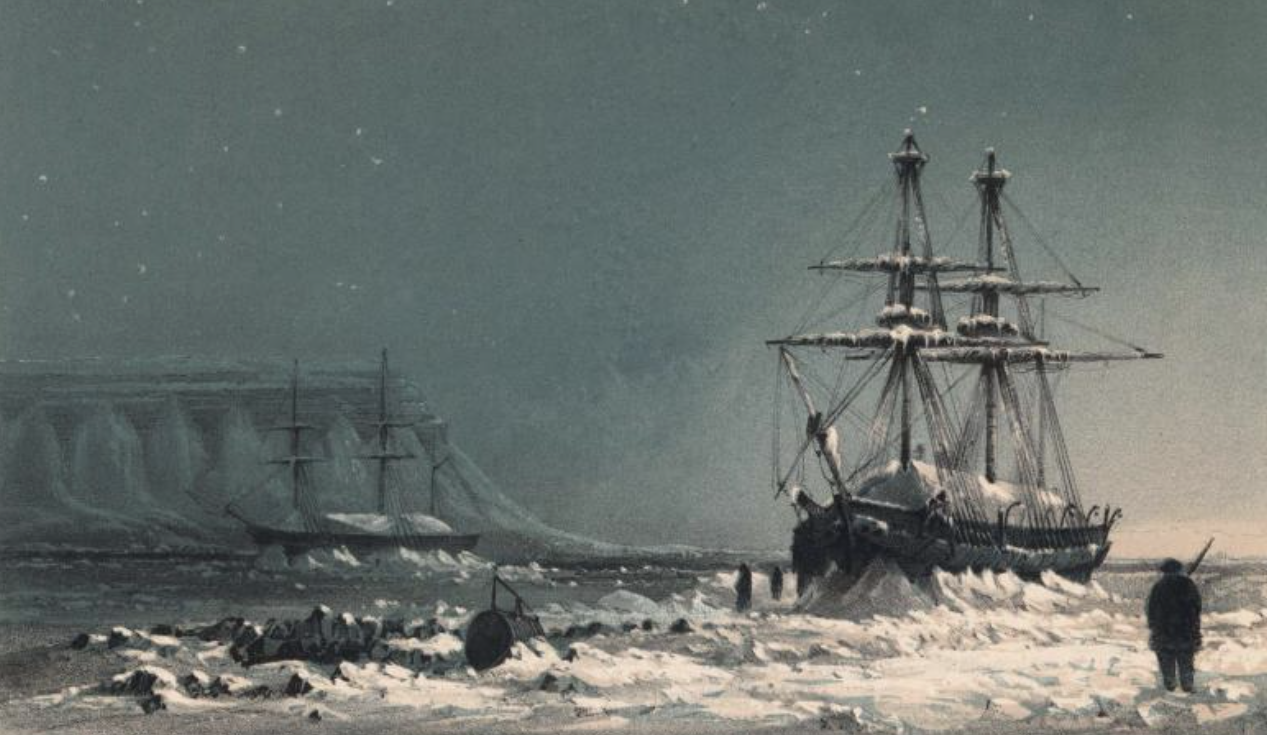
The Arctic is a vast frozen sea: the polar ice caps cover much of its waters most of the years, making it difficult to access even today. However, this has not prevented explorers and adventurers from venturing into it. The most famous of all Arctic expeditions remains, to this day, the search for the Northwest Passage, which would link the Atlantic and Pacific Oceans via the surrounding waters of the Canadian archipelago.
The search for the Northwest Passage began in the late 15th century, with Cabot’s expedition on behalf of the English Crown. From Cabot to Sir John Franklin’s expedition in 1845 numerous expeditions were organised by various countries over the course of five centuries. It was only in 1906, however, that the first complete crossing of the Northwest Passage took place, led by Roald Amundsen.
The exploration of the route was not driven solely by economic and commercial considerations. The exploration also had symbolic meaning for its time: it was an expression of a nation’s strength. In fact, a man’s ability to achieve great deeds was celebrated as a demonstration of his people’s tenacity.
To understand this trend, one must comprehend the international context of the time. The broadly nationalist sentiment, prevalent amongst European countries, manifested itself in a race to demonstrate the superiority of one people over another, for this reason, great expeditions like Amundsen’s, turned into major propaganda campaigns.
Another example of this is the journey made by Umberto Nobile and Lincoln Ellsworth to the Svalbard Islands aboard the airship Norge, organised by Amundsen himself. The Norge expedition demonstrate not only the explorers’ skills, but also the level of technology that made the expedition possible, a symbol of the country’s capabilities.
The second phase and the Cold War
World War II has dramatically shifted the strategic importance of the Arctic. During the war, the German occupation of Denmark and Norway had created the conditions for a Nazi expansion into the Arctic. The only obstacle to this objective was the British resistance, which confined the German war machine to the European mainland.
During the war, the Arctic allowed the United States, the United Kingdom and the Soviet Union to exchange aid, munitions and troops, thereby bolstering the war effort. The transfer of war-related supplies between the US and USSR was assured by their proximity across the Bering Strait. However, the same assurance could not be given to trade between the US and the UK, which depended on the geographical position of Greenland and Iceland (which belonged to the Kingdom of Denmark, a country politically aligned with the Allies).
The subsequent outbreak of the Cold War only served to confirm the Arctic’s role as a bridge between the two sides of the Atlantic, for two main reasons.
The first reason is geographical: given the shape of the globe and the distribution of the continental masses, the outbreak of any open conflict between the two blocs would have seen the Arctic as a zone of skirmishes. In fact, in addiction to troop movements, the launch of missiles was widely planned to strike enemy cities and infrastructure. In this scenario, the Arctic would have served as a crossroad for missiles heading towards the enemy, as they would have travelled a shorter distance and would therefore take less time to reach their targets.
The second reason, however, is strategic. Aware that the main conflict would take place on European soil, two for the primary objectives were to maintain links between North America and Europe and to prevent Soviet naval and submarine incursions into the North Atlantic. Both of these objectives could be achieved through the constant monitoring and patrolling of the GIUK Gap.
Throughout the Cold War, these two factors influenced the way in which the Arctic was perceived by both sides. Ironically, the region was one of the world’s most politically heated areas.
The third phase and the post-bipolar order
The end of the Cold War came early in the Arctic. In keeping with the prevailing climate of disarmament, the Arctic nations were the first in the world to agree on the withdrawal of military forces from the region. Instead, it became imperative to focus joint efforts on scientific research to understand the effects of climate change. This trend was confirmed by Gorbachev’s 1987 speech in Murmansk, in which he welcomed and promoted the transformation of the Arctic into a zone of peace and cooperation.
From this period onwards and for the next 20 years, the Arctic has gradually lost its central importance. The end of armed conflicts and the region’s transformation into an area of predominantly scientific interest led the states to disengage from the Arctic. Furthermore, various crisis areas have prompted Western countries to turn their attention to the Global South, thereby relegating the Arctic to a mere periphery.
The event that refocused the attention of the countries on the Arctic was the planting of a Russian flag on the seabed of the Arctic Ocean with a submarine in 2007, near the North Pole. This action not only symbolises Russia’s return to the regional stage, once again able of fulfilling a leading role, but also signifies that the Kremlin has ambitions in the Artic that cannot be ignored.
Russia’s ambition centres primarily on reclaiming territorial waters with resource-rich seabed to fuel its economy and cement its position as an exporter of raw materials. However, other countries have reacted with concern. Recognising Russia’s new assertiveness in the region, other states have also turned their attention back to the Arctic and its resources.
Among the various effects of climate change, it is also worth noting that it has made certain areas of the region more accessible, thereby enabling the launch of programmes to extract fossil fuels and raw materials. Consequently, due to climate change and the general increase in demand for resources, the Arctic now serves as an arena of competition for the acquisition of resources. Oil and gas are not the only resources linked to energy needs. The Arctic is, in fact, at the heart of a competition to enable Western – and, above all, European – states to ensure the green transition and the development of renewable energy. Rare materials and other elements are abundant in the region, so it is essential for European countries to secure access to them in order to meet at least the minimum targets of the 2030 Agenda.
The renewed focus on resources and their extraction has given rise to two new phenomena that are transforming the Arctic into a region of low-tension competition. Firstly, the process of securitisation, which is officially carried out to protect maritime routes, but which is actually aimed at securing control over resources. Secondly, there is the use scientific research for dual-use purposes, particularly by China, with the aim of exploiting data collection to obtain information on Western countries’ trade flows and technology.
It is therefore clear that the Arctic is once again taking centre stage on the global stage. Scientific research, resources and security are the key issues driving the policies of the Arctic nations. However, all three topics can be tied back to the macro-issue of climate change, which has paved the way for this new phase and which, in one way or another, present both challenges and opportunities for the Arctic and international community.